


Transport building better communities - Gil Penalosa visit
Septemeber 2026
Delivering cities that work for everyone in society was the key theme Gil Penalosa explored during his trip to Brisbane for TPA’s National Transport Conference.
Gil Penalosa is an influential urbanist and keynote speaker in liveable cities, having worked in more than 350 cities across the globe. He is the Founder and Chair of the Canadian based non-profit organisation 8 80 Cities – because a community that works for an 8 year old or an 80 year old will work for everyone. He is also an academic chair at the Norman Foster Institute for Sustainable Cities.
Gil was a keynote speaker at the conference, but TPA made sure he was able to talk to a range of other audiences and decision makers while he was here, to build the impetus for positive change in transport.
Across four action-packed days, Gil delivered fast-paced, inspiring presentations that challenged transport, urban planning and public health audiences to think differently about how we design and shape our cities. His message was clear: by creating places that work for people of all ages and abilities, we can build healthier, happier and more vibrant communities.
He was strongly focused on the role transport can play in public health.
"There are no cities in the word where large sections of the population are physically active on a regular basis, unless people are walking or cycling as part of everyday life" (in other words, walking or riding for transport)
Gil also stressed the need to keep older people healthy in ageing societies like Australia. Incredibly, it is estimated that two out of every three people who have ever made it to age 65, in the history of the world, are alive today.
With a more practical focus, he emphasised the need for action and urgency – you can have a 50 year plan, but the most important year is the next 12 months and what you will do in it.
Media coverage
Gil’s focus on 'Open Streets' also attracted coverage in the Brisbane Times, where it was the third most popular story on the day of publication Ciclovia movement: How closing streets to traffic could transform Brisbane into a more pedestrian-friendly city
Gil also joined 4BC Drive’s Carla Bignasca to discuss the Open Streets vision and how Brisbane can improve its public transport ahead of the Olympic Games.
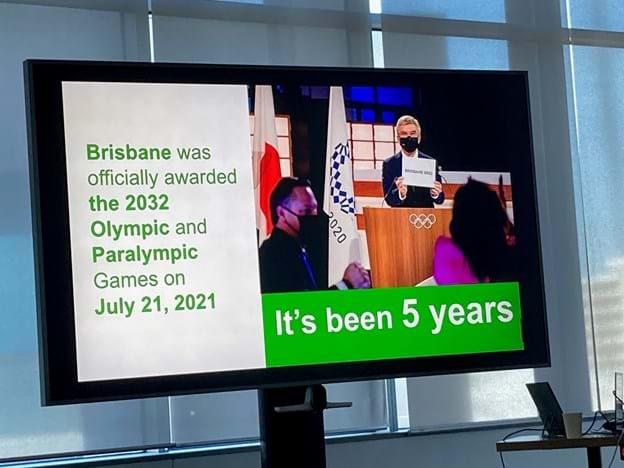
The Olympic opportunity
Preparing for the Brisbane Olympics in 2032 is a big focus in South-East Queensland. So when we talked to a state government audience – hosted by conference partner the Department of Transport and Main Roads – Gil stressed the need to use the Olympics as a catalyst to build a more liveable city.
He held up Paris and Barcelona as the Olympic cities that had best taken the opportunity to transform themselves. Paris rapidly built a network of protected bike lanes and cleaned up the Seine River so that people could swim in it. He also noted that in Paris, drivers of large vehicles pay much more for parking than smaller vehicles – perhaps an option to address the proliferation of super-sized utes here in Australia.
Other audiences
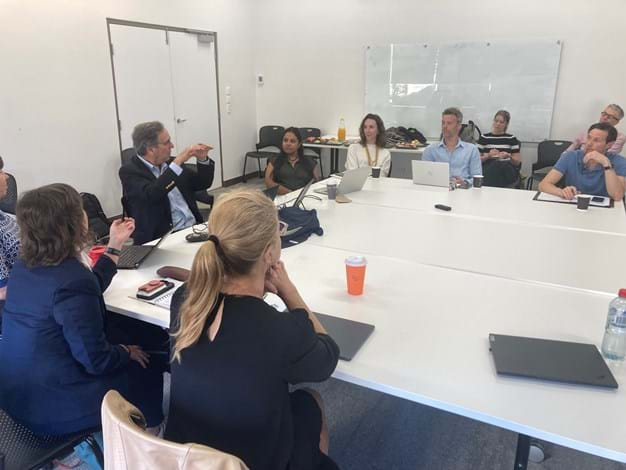
Cycling and Walking Australia and New Zealand (CWANZ) held their annual meeting in Brisbane to coincide with the conference. "Don't make it about cycling" was an interesting opening from Gil when we spoke to them. He argued that things like building protected bike lanes, slower traffic speeds, urban greening and open streets initiatives need to be positioned as supporting community health, mental wellbeing, positive ageing, fighting climate change, or children walking and riding to school. A key dimension is understanding what rationale will resonate with your community and decision makers.
He pointed out that unless you already had at least 20% bike mode share, any sense that you were favouring bikes over cars was doomed to failure, because the numbers don't stack up for politicians.
Other audiences Gil spoke to outside the conference were:
- A Queensland stakeholder forum with groups like the Heart Foundation, Queensland Walks, the Committee for Brisbane and the Planning Institute of Australia (thanks to our Queensland Vice President Roger Green and the team at Jacobs for hosting this session).
- A local government audience, including Mayor Tanya Milligan from Lockyer Valley Regional Council, a number of other councillors and a range of staff. It was also great to be joined for this session by Bart Mellish MP, Shadow Minister for Transport and Main Roads.
Overall, it was a highly thought-provoking few days that have already inspired a range of follow up conversations.