A Speakers Perspective | Healthy Streets QLD
September 2025
By Sarah Bridges
Principal, Transport
Aurecon

The timing couldn’t be better for this panel. In sunny subtropical Brisbane, host of the 2032 Olympics (just in case you missed it), walkability will be a defining factor in the Games’ success. At the crucial moment when thousands of people ask, “How will I get to the venue today?” our challenge is to make walking, rolling, strolling, scooting, or using public transport the easy choice.
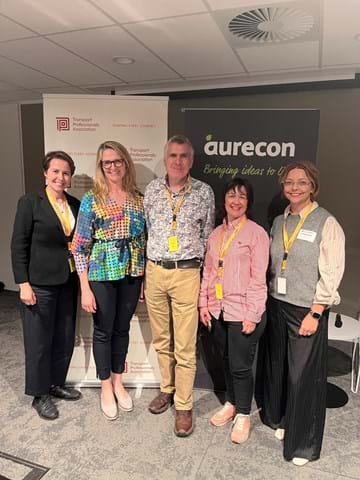
With skilful moderation from Jerryn Zwart, our discussion spanned scales of impact—from political advocacy through to design and operational detail.
Lucy Saunders, renowned for her pioneering Healthy Streets Approach, reminded us of the importance of designing environments that prioritise health and wellbeing over traffic flow. She emphasised the need to balance quantitative data (traffic, bike, and pedestrian counts) with qualitative insights and lived experiences, building advocacy narratives that resonate with both policymakers and communities.
Giles Perkins, Head of Profession for Future Mobility at WSP UK, drew on years of research to show how street design can support social inclusion, physical activity and mental wellbeing. His message was clear: when we focus on accessibility, comfort, and dignity—particularly for children, older adults, and people with disabilities—we create streets that serve everyone better.
Anna Campbell, CEO of Queensland Walks, shared progress in advocating for walkable places that enable Queenslanders to make the sustainable choice to walk, roll, or stroll. She spoke about the importance of persistence in advocacy, partnerships with organisations such as Zonta, and the power of cross-sector collaboration—highlighting successes like the School Active Infrastructure Pilot (SATIP).
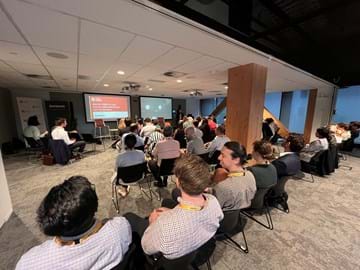
Audience engagement was another highlight with a knowledgeable and highly engaged crowd. Questions centred on the value of lived experience as a core dataset for decision-making, and the role of short-term wins. Quick, visible interventions—like pedestrian-friendly traffic light phasing, pilot pedestrian zones, pop-up bike lanes, or small-scale public realm enhancements—can demonstrate what long-term change looks like, building trust, gathering data, and laying the foundation for systemic shifts.
We also touched on the often-overlooked value of applying systems engineering processes, including human factors assessments and Safety in Design methodologies. These structured approaches can help ensure interventions deliver lasting value and avoid unintended consequences of the dreaded value management process.
For me, the panel was a powerful reminder: real transformation happens when we listen deeply, collaborate across disciplines, and value both data and lived experience. With leaders like Lucy Saunders driving the conversation, momentum is building toward a more integrated, evidence-based, and human-centred approach to transport and public realm design—one that will benefit us all.