



TUESDAY 7 OCTOBER 2025

Australia’s Transport Sector Net Zero Roadmap: Progress, Alignment, and Opportunities for Improvement

CWANZ has just released the 2025 National Walking and Cycling Participation Survey, offering the most detailed snapshot yet of how people across Australia walk, cycle and wheel.
With data from over 12,000 Australians, this biennial survey reveals:
- 81% walk weekly, but time pressures are changing habits
- 15% cycle weekly - and transport cycling is on the rise
- E-bike ownership has doubled since 2023
- 2 in 5 Australians say they’d ride more if they felt safer
- Micromobility is emerging, especially among younger urban users
The message is clear: better infrastructure = more active travel.
Explore the findings and download the national and state reports: https://lnkd.in/g6-a4jZN
Join us for the Austroads webinar on Wednesday 9 October 2025 to dive deeper into the results. 10:00am AWST / 1:00pm AEDT https://lnkd.in/gzgfZ93g
Commercial E-Bikes: Monash-VACC Study Reveals Scale of Non-Compliance
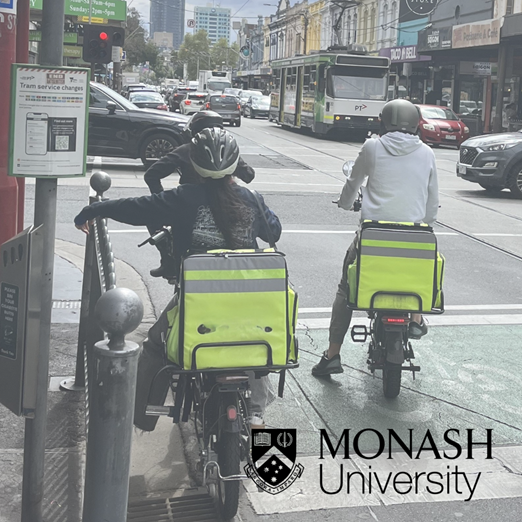
The Monash Institute of Transport Studies, in partnership with the Victorian Automotive Chamber of Commerce (VACC), has released new research highlighting widespread non-compliance among Melbourne’s commercial delivery e-bikes.
In a study conducted by A/Prof Alexa Delbosc, Prof Geoff Rose and Dr Brendan Lawrence, more than 27,000 two-wheeled vehicles were recorded over three days in May 2025. Almost half (47%) were delivery e-bikes, outnumbering pedal bicycles (37%) and dominating the streets in the evening and overnight.
What the study found:
- Throttle over pedal: Just 4% of delivery e-bikes were observed pedalling, suggesting many are modified or throttle-powered and not legally classed as e-bikes.
- High speeds: One in five delivery e-bikes exceeded 25 km/h, with a top speed of 54 km/h recorded.
- Compliant fleets perform better: Some compliant delivery vehicle fleets, such as Zoomo e-bikes, showed safer patterns — lower speeds, more pedalling, and no speeding breaches.
The findings reinforce concerns that many delivery bikes are operating as unregistered motorbikes on public roads. This is of significant concern given that these vehicles make up nearly half of the two-wheeled vehicle fleet in inner-city areas. Delivery riders may be unaware that their vehicles could be classified as unregistered motorbikes and the significant fines that can result from this breach. This report highlights the broader regulatory challenges in managing e-bikes within Australia’s urban transport mix.
You can read the full report here.
Safety star ratings launched for Australian arterial roads

Austroads, the association of Australasian road transport and traffic agencies, has today released safety star ratings for Australia’s major arterial roads – the roads that carry the majority of traffic – in a landmark step towards making our roads safer. The new National AusRAP Dashboard gives a clear, interactive view of road safety to prioritise life‑saving upgrades.
These star ratings are part of the Australian Road Assessment Program (AusRAP), a nationally coordinated effort to identify which roads pose the highest risks of death and serious injury, and where road upgrades will have the greatest life-saving impact.
“We know not all roads are equal when it comes to risk,” said Geoff Allan, Austroads Chief Executive. “That’s why the focus of AusRAP is on the country’s most travelled roads – the highways and major arterial routes where millions of Australians drive every day, and where fatal and serious injury crashes are most likely to occur.”
“By publishing star ratings and crash history data on a single, national dashboard, we’re giving governments and the community a clear line of sight to where upgrades will have the greatest impact,” said Allan.
Australia has a vast road network, and while many regional and local roads also need safety improvements, this phase of AusRAP is intentionally focused on the busiest corridors – where the risk is highest because of the sheer volume of traffic and higher travelling speeds. This targeted approach, used together with or alongside other tools, assists governments to prioritise investments where they will save the most lives, the soonest. Future phases will expand coverage as new assessments and data become available.
“Road safety star ratings are a robust and trusted tool for communicating road safety information to the public, and Austroads is proud to coordinate and publish our members’ results. Importantly, these results provide a snapshot in time of the safety of our roads – and there is still much work to be done to reach our goal of having 80% of all travel occur on roads rated 3 stars or better by 2030,” added Geoff Allan.
Australia’s national AusRAP results are published through the interactive National AusRAP DashboardOpens in new window, an evidence‑based tool that shows AusRAP Star Ratings, crash history metrics and traffic volumes, enabling transparent, accountable and evidence-based investment decisions.
Regulatory Impact Analysis to reduce the open road default speed limit
The Federal Government is seeking feedback on a proposed reduction of the speed limit on roads outside of built-up areas where there are no sign-posted speed limits to help improve safety. The risk of being killed on a regional or remote road is 11 times higher compared to a road in a major city. Your feedback will inform updates to the Australian Road Rules for sealed and unsealed roads outside of built-up areas, which can be considered by state and territory governments.
Have your say here: